








Introduction
TL;DR / Quick Answer - What’s the Fastest Way to Trim your Beard Evenly and Maintain Style?
Trim your beard when it’s clean and dry, start long, taper gradually, define neckline and cheek line, and finish with beard oil for hydration.
Quick Steps:
- Wash and dry beard completely
- Brush out tangles for smooth trimming
- Pick guard length, start long, reduce gradually
- Define neckline and cheek line
- Fade sides shorter than chin for natural look
- Apply beard oil or balm for softness and shine
What Are the Tools You’ll Need for a Precise, Even Beard Trim?
Using the right tools ensures consistent length, sharp edges, and an even trim across your beard. To achieve a sharp, balanced beard, gather these beard trimming essentials:
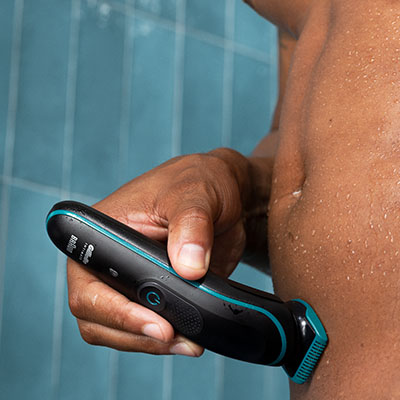
- Beard Trimmer with Adjustable Guards – For precise length, control and tapering
- Beard Scissors – Ideal for trimming flyaways and fine detailing
- Comb & Beard Brush – Align hair and detangle for smooth trimming
- Beard Oil or Balm – Hydrates hair and skin, adds softness and shine
Choose Your Guard Length:
- Short/Medium Beards: 3–5 mm for a neat, close finish
- Longer Beards: Start with a higher guard, then taper gradually to avoid cutting too short
How Do You Trim a Beard Step by Step?
A structured beard‑trimming routine keeps your beard neat, balanced, and easier to shape. Following each step in order reduces mistakes and gives you better control over length, lines, and symmetry.
Step 1
Clean and Dry Your Beard Before You Start Trimming
Trim after showering, once your beard is fully dry. Hydrated hair cuts more easily and gives you a clearer picture of how your beard will look once styled.
Why it matters: Wet hair stretches, which can trick you into trimming too short. Trimming when dry ensures precision and prevents uneven length.
Step 2
Brush Out Any Tangles
Brush out your beard. This detangles knots and sets your beard up for optimal grooming.
Why it matters: Brushing lifts the hairs into their natural direction and evens them out — making the trim neater and prevents snagging or uneven patches.
Step 3
Pick Your Beard Style and Tools
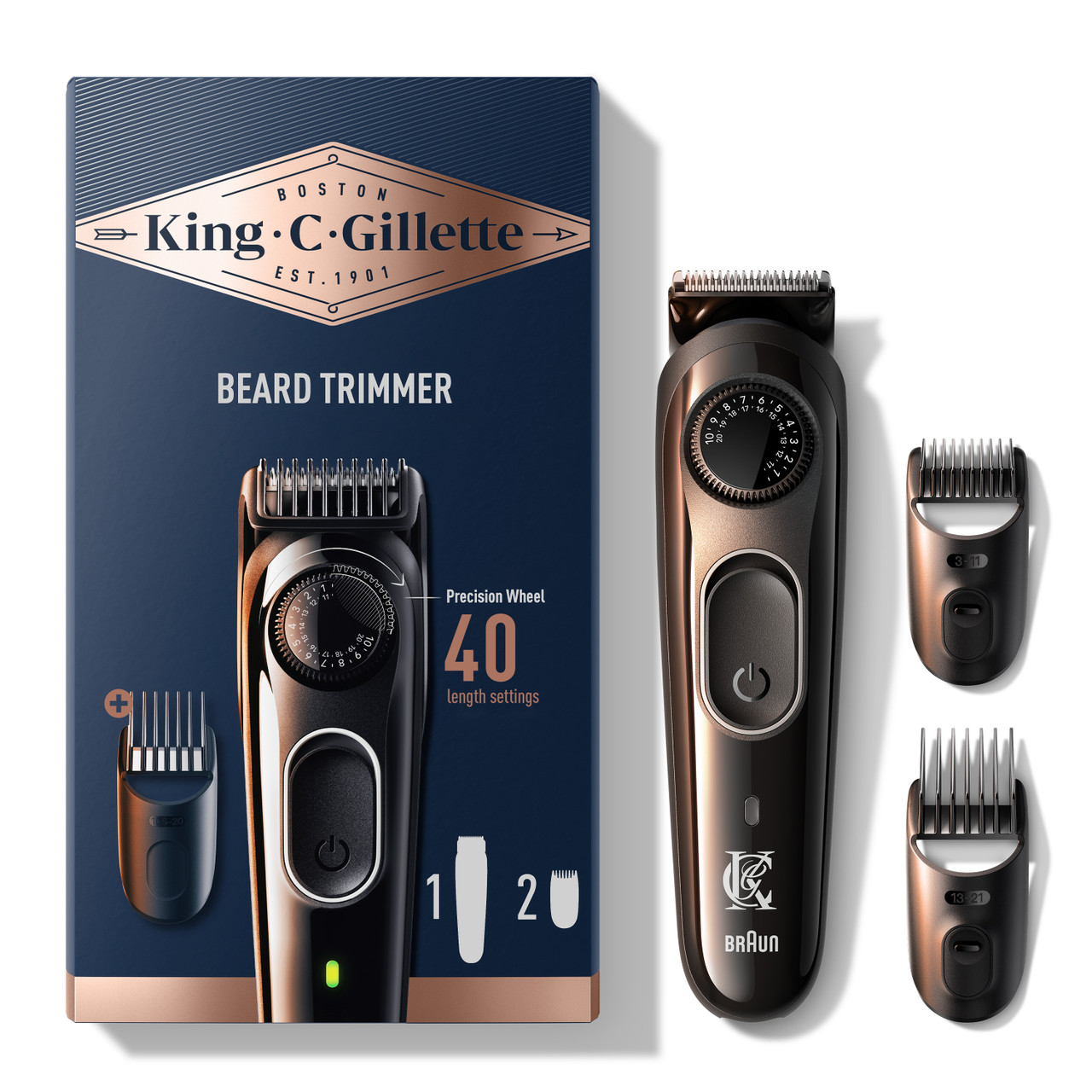
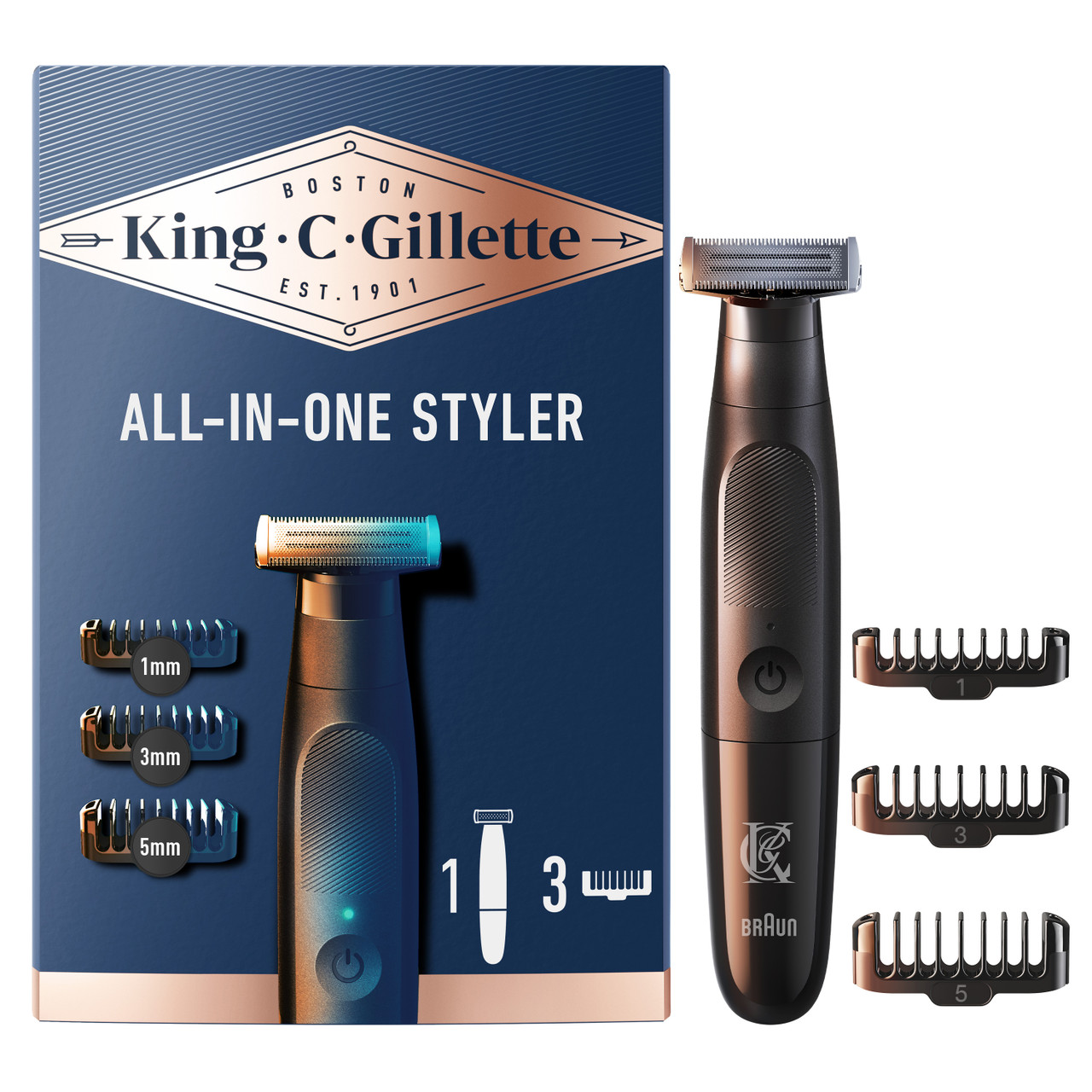
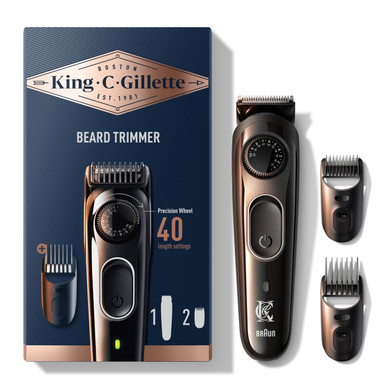
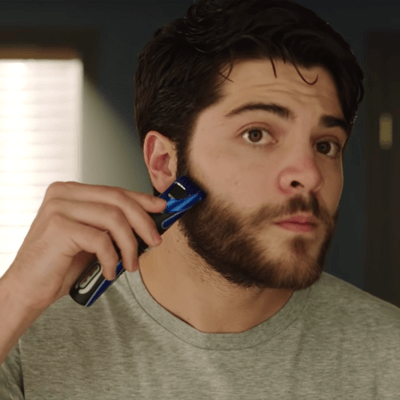
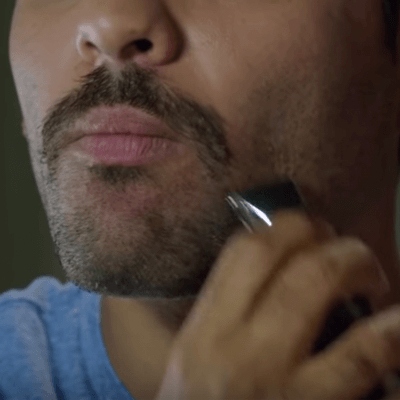
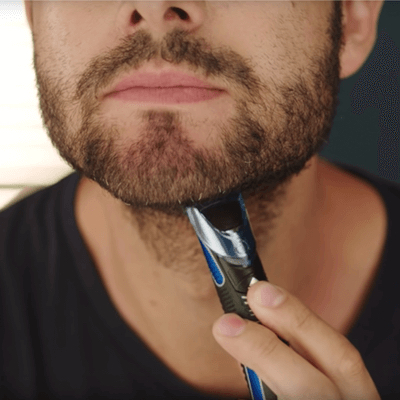
Use the King C. Gillette Beard Trimmer to get an even trim. For the best trimming, pull your skin taught and trim in a sweeping motion away from your face with clean, controlled strokes.
Why it matters: Your tools shape your outcome. Using the right trimmer and consistent motions ensures even cutting, predictable length control, and fewer jagged edges.
Step 4
Start Long and Work Your Way Down
Remember, there’s no undo button for bad trimming, so start with a longer guide comb to control length. For the best styling, trim your beard shorter on your neck and cheeks. Keep hair longer on your chin to create a fade. For more inspiration, check out the top beard styles for men.
Why it matters: Once hair is cut, you can’t put it back. Starting long prevents accidental over‑trimming and ensures you can refine your shape gradually and safely.
Pro Tip:
“Start long, step down slowly.”
Step 5
Brush Down Your Mustache
After trimming, brush your mustache hair downward and remove the guide comb to buzz the hair that extends over your lip.
Why it matters: Mustache hairs grow in multiple directions. Brushing them down reveals the true length and ensures you only trim what’s needed for a clean lip line.
Step 6
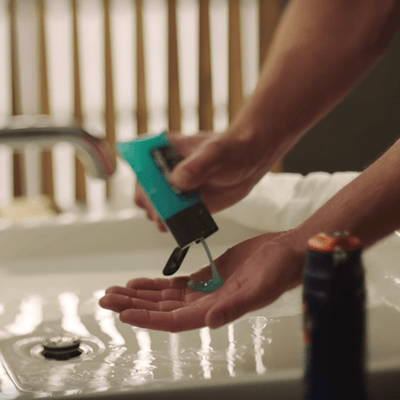
Moisturize with Lightweight Beard Oils
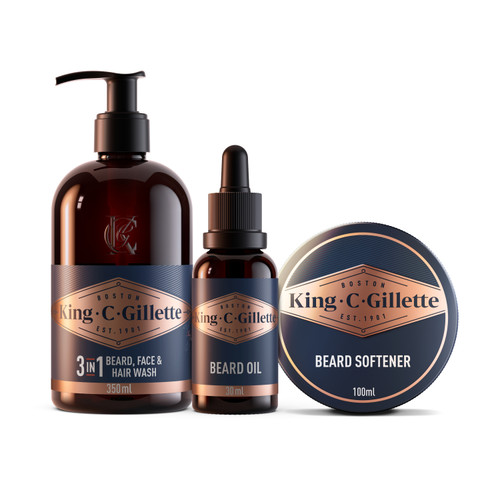
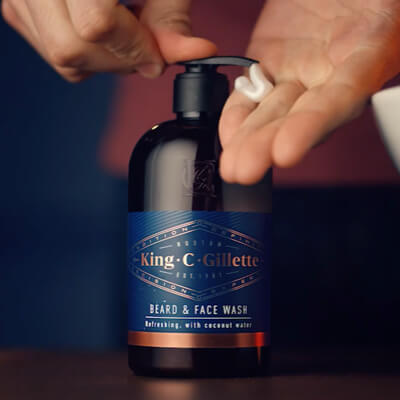
Use beard oil to keep your beard soft and healthy. These lightweight oils help keep moisture in your beard hair and skin to soften and maintain unruly beards and mustaches. Check out King C. Gillette Beard Care Kit.
Why it matters: Trimming exposes fresh hair ends and can dry out both hair and skin. Beard oil hydrates, reduces itch, prevents split ends, and keeps your beard looking polished.
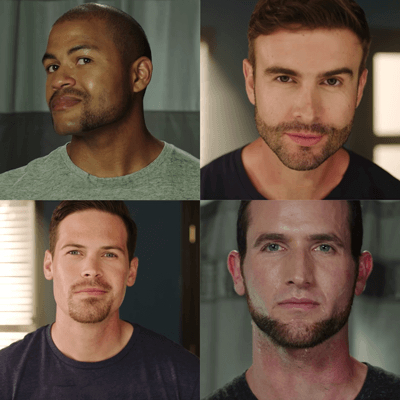
How Should You Trim for Different Face Shapes?
Your beard shape should complement your facial structure. Here’s how to balance proportions:
- Round Face: Keep sides shorter and chin fuller to elongate the face.
- Square Face: Add fullness on the sides and soften cheek curves for a less angular look.
- Oval Face: Maintain balanced lines—this versatile shape suits most beard styles.
- Diamond Face: Soften prominent cheekbones with a higher cheek line and keep the chin neat for harmony.
Beard Styles by Face Shape:
Get more detailed information about Facial Hair Styles
How Should You Set Guard Lengths and Choose Directions?
Choosing the right guard lengths and trimming direction helps avoid uneven cuts and over‑trimming. A tapered approach with mindful strokes ensures cleaner fades and a more natural beard shape.
- Sides vs. Chin: Use shorter guards on the sides and longer guards on the chin to create a tapered, natural look. This prevents a blocky silhouette and adds definition.
- Direction: Trim with the grain for comfort and reduced irritation. For a closer finish, go against the grain—but only if your skin tolerates it. Always use light, controlled strokes.
Pro Tip:
“Light strokes, clean passes.”
How Do You Define Neckline and Cheek Line Properly?
Clean neckline and cheek lines make any beard style look more intentional and well‑kept. Using simple rules and symmetry checks ensures sharp definition without distorting your natural facial shape.
- Two-Finger Neckline Rule: Place two fingers above your Adam’s apple and trim everything below this line in a gentle “U” shape toward the ears.
- Cheek Line: Keep it natural or define with a trimmer for sharpness. Avoid dropping the cheek line too low—it can distort your face shape.
- Symmetry: Use mirror checks and a comb as a guide to ensure even lines on both sides.
How Do You Fade the Neckline for a Natural Transition?
For a professional finish, step down one to two guard settings below the neckline. This creates a smooth fade from beard to bare skin, avoiding harsh lines.
Common Mistakes to Avoid When Trimming Your Beard
Avoiding typical trimming errors keeps your beard looking neat and well‑balanced. Most problems come from trimming too much too quickly, ignoring symmetry, or choosing the wrong guard length.
- Trimming Wet Hair - Wet hair stretches, causing uneven length. Always trim when dry.
- Dropping Cheek Line Too Low - Alters your face shape and makes the beard look unnatural.
- Skipping Neckline Cleanup - Leaves the beard looking untidy and unfinished.
- Rushing Without Symmetry Checks - Leads to uneven sides; check in the mirror as you go.
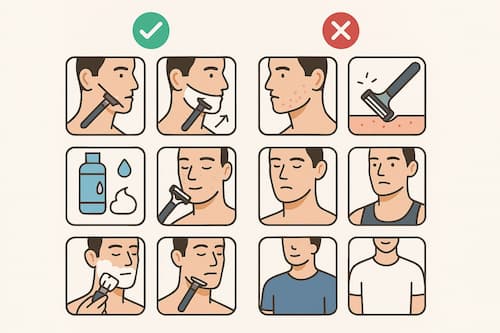
Troubleshooting Beard Trimming: Quick Fixes for Common Issues
Small trimming mistakes are easy to fix when you adjust gradually and use the right tools. Simple corrections like re‑balancing length or redefining lines bring your beard back into shape without drastic changes.
- Neckline Too High? Let it grow out and reshape gradually using the two-finger neckline rule for a natural look.
- Cheek Line Uneven? Use a comb as a guide and perform mirror checks before trimming further to restore symmetry.
Aftercare & Maintenance Tips for a Healthy Beard
Proper aftercare keeps your beard soft, clean, and well‑shaped between trims. Regular hydration, brushing, and scheduled touch‑ups help maintain a polished, healthy look long‑term.
- Short/Medium Beards: Typically trim every 5–7 days, depending on your hair growth and preferred style.
- Long Beards: Groom and tidy edges regularly; frequency varies by growth rate and style.
- Daily Habits: Brush or comb daily and apply beard oil from King C. Gillette Beard Care Kit to hydrate, soften, and prevent dryness.
Conclusion – How Do You Keep Your Beard Sharp Week After Week?
Consistency is key: clean, brush, trim gradually, define lines, and hydrate daily. Match your beard style to your face shape, avoid common mistakes, and maintain with regular trims and beard oil for a polished look.
FAQs on How to Trim a Beard
-
How often should I trim my beard?

Trim frequency typically ranges from 5–7 days for short beards, depending on growth and the look you prefer. Longer beards need consistent edge control and hydration. Use the King C. Gillette Beard Trimmer for consistent length settings.
-
What is the best way to trim a neckline?

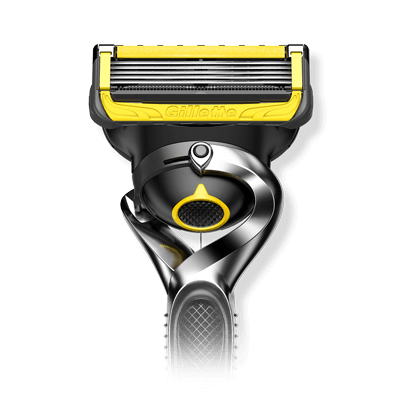
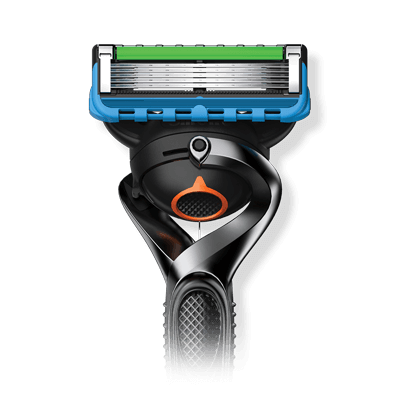
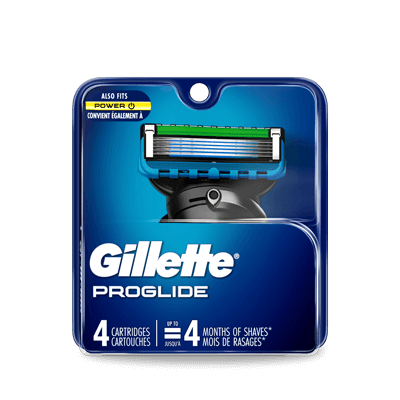
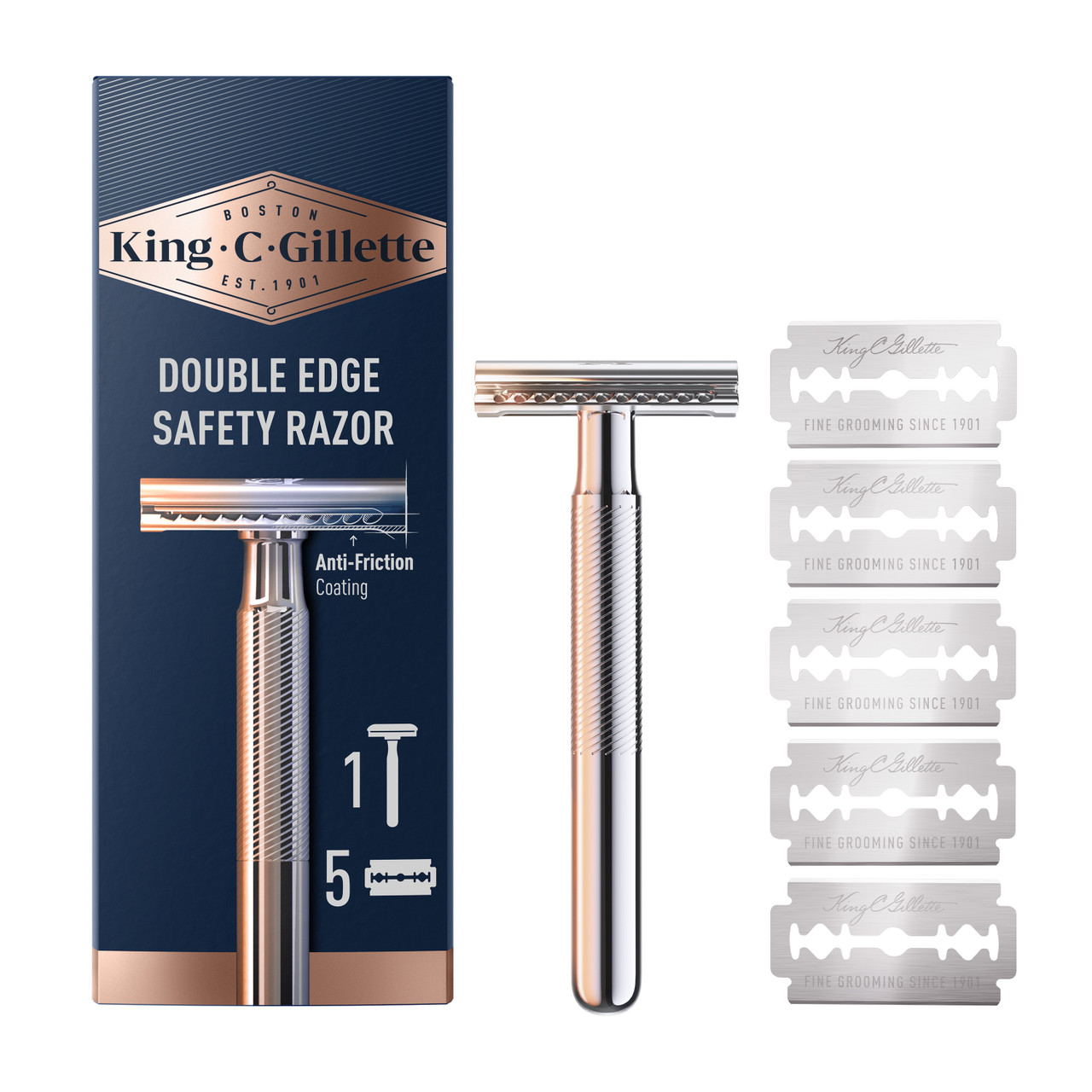
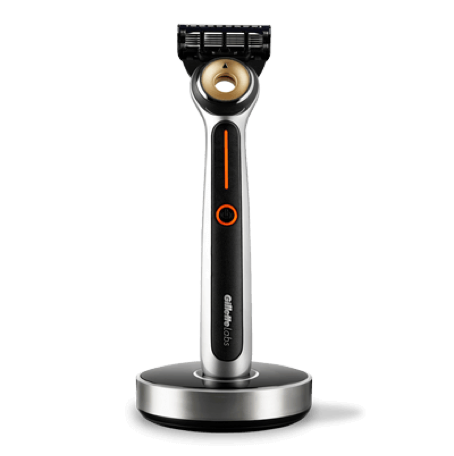
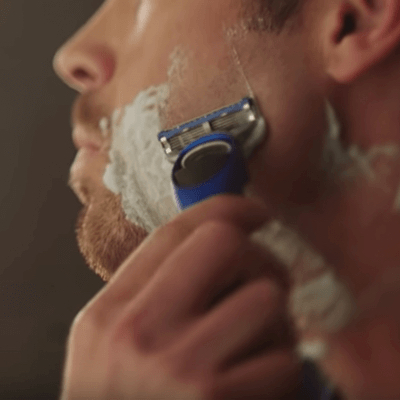
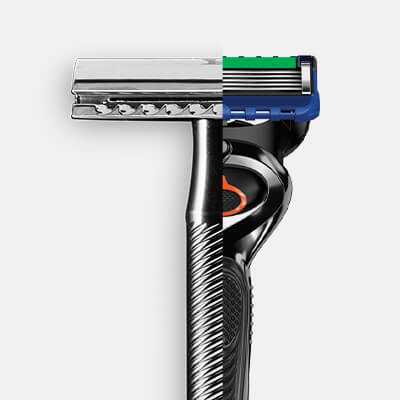
Use the simple two‑finger rule: place two fingers horizontally at the base of your neck. The line above your fingers marks where your neckline should begin. Trim everything below for a clean finish. For precision cleanup: Try the Gillette ProGlide Razor.
-
Do I trim my beard up or down?
Trim with the grain for comfort and go against the grain only if your skin tolerates it for a closer finish.
-
How do I shape a scraggly beard?
Brush daily, trim stray hairs with scissors or a trimmer, and apply King C. Gillette Beard Oil for softness and shine.
-
Should I trim my beard when it’s dry or after showering?
Always trim when your beard is dry, as wet hair stretches and can lead to uneven cuts. Dry trimming ensures accurate length and shape.
-
What’s the best trimmer for beginners?
The King C. Gillette Beard Trimmer is perfect for beginners, offering 40 length settings and precision control for all beard styles.
-
How do I prevent split ends in my beard?
Regular trims and daily hydration with beard oil or balm keep hair healthy.
-
Can beard oil help with patchy growth?
Beard oil won’t fill gaps, but it improves texture, softness, and appearance, making your beard look fuller and healthier.
-
How do I keep my beard looking sharp between trims?
Clean up your neckline with a ProGlide Razor, brush daily, and apply beard oil.
-
What’s the easiest way to maintain symmetry?
Use a comb as a guide and check in the mirror before trimming. Start conservative—there’s no undo button!
Was this article helpful?

